Tuesday, June 22, 2021

8 Reasons why Aluminium is Perfect for Windows and Doors

 Aluminium has been called a ‘magical metal’. Mainly found as Bauxite ore, it’s the third most common element in the earth’s crust and the most abundant metal on the planet. But what makes it perfect for use in windows, doors and curtain walling?

Well, it’s the chemical, physical and mechanical properties of modern-day aluminium alloys that account for the steep rise in its global use at over 5% every year. Here are just 8 reasons why the market for aluminium frames in the glazing world continues to grrrow, now dominating the commercial market and giving PVC-U a .un for its money in the residential secto

  1. Light weight – Aluminium is a very light metal with a specific weight of just 2.7 g/cm3, which is about a third that of steel or copper. In fact, it’s one of the lightest commercially available metals. This makes it ideal for window and door frames, but using a lightweight frame is especially important when it comes to curtain walling. Curtain walls are not structural and are only able to carry their own weight, so the lighter the better.
  1. Resistant to corrosion – if you’re looking for a low maintenance window, then aluminium is your answer. That’s because when aluminium comes into contact with air, a protective layer of aluminium oxide immediately forms on the surface. This layer is extremely resistant to corrosion from anything the weather can throw at it, including acid rain, and won’t be damaged by cleaning products. And unlike timber or PVC-U frames, aluminium window frames won’t swell, crack, split or warp over the years whatever the weather. Protection from corrosion can be increased even further by anodising or painting (usually by powder coating) the surface.
  1. Won’t break – aluminium is both malleable and ductile – in case you’ve forgotten your GCSE chemistry, that means it can be bent or pressed into shape or drawn out into a thin wire without losing its toughness and without breaking or cracking. In other words, its pliable not brittle. In fact, aluminium is the second most malleable metal and the sixth most ductile. This is fantastic news for anyone wanting a curved curtain wall or window, as the aluminium frame profiles can easily be bent or pressed into the required shape without any danger of them breaking.
  1. 100% Recyclable – Aluminium is unique when it comes to recycling metals. It is 100% recyclable and the quality of recycled aluminium is identical to that of virgin aluminium. Which means it can be recycled again and again. In fact, nearly 75 percent of all aluminium ever produced is still in use today. This is good news for aluminium supply, especially when you consider that since the first industrial quantities of aluminium were produced around 100 years ago, worldwide demand for aluminium has grown to around 29 million tons per year. But it’s even better news for the environment, because whilst it takes 14,000 kWh to produce 1 tonne of new aluminium, it only takes 5-10% of this to remelt and recycle the same amount. Which means a smaller carbon footprint and lower costs.
  1. Very strong – aluminium alloys are used to make window door and curtain wall frames. That’s because pure aluminium on its own doesn’t have a high tensile strength. However, once it is alloyed with other elements like manganese, silicon, copper and magnesium its strength increases vastly. The tensile strength of pure aluminium is around 90 MPa but can be increased to over 690 MPa as an alloy. In fact, Aluminium which as we’ve already seen is one of the lightest engineering metals, has a far better strength to weight ratio than steel when used as an alloy. Even more impressive, unlike steel, the strength of aluminium increases the colder it gets, whereas steel becomes brittle at low temperatures (below 0oC). This means that aluminium windows, doors and curtain walling can more than cope with the most extreme winter temperatures in the UK. The lowest temperature recorded in the UK was -27.2°C in Scotland.
  1. Readily forms alloys – as we’ve already seen aluminium is usually alloyed with other elements to improve its physical properties. For example, the strength of pure commercial aluminium can be increased by 20% by simply adding manganese. Aluminium also readily forms alloys with silicon, copper, zinc, iron and magnesium. This means it is possible to produce a range of alloys with properties tailored to particular applications. Aluminium glazing firms use alloys of aluminium with silicon and magnesium which are an excellent choice for extruding aluminium profiles. They are very versatile, heat treatable, highly formable, weldable and have high strength plus excellent corrosion resistance.
  1. Easy to make into frames – aluminium window frames are made using an extrusion process i.e. by forcing the pre-heated aluminium alloy through a die to create an aluminium profile. These profiles are then joined together to form the frame. It is the design of these profiles that gives the window frame its unique characteristics. They can be complex designs but thankfully these intricate shapes can be achieved using a single extruded section, so that the profiles are both strong and durable. Aluminium also has good machinability, making it easy to accurately fabricate the aluminium profiles into the finished window frame.
  1. Decorative – aluminium can be easily anodized or powder coated to give it a decorative smooth or textured finish. This means that aluminium windows, doors and curtain walling not only perform well but look fantastic too. Anodising is carried out by immersing the aluminium in an acid electrolyte bath and passing an electric current through it. This converts the metal surface into a decorative, durable, corrosion-resistant, aluminium oxide finish. The aluminium oxide is fully integrated with the underlying aluminium, so that it cannot chip or peel, making it amazingly durable. The aluminium oxide has a porous structure so needs to be sealed to make it resistant to corrosion. The sealant can be clear or contain special dyes so that anodized aluminium is available in a wide range of colours. The alternative is to powder coat the aluminium with paint. The aluminium is pre-treated either by anodizing or via a chemical reaction to form a corrosion resistant barrier, and can then be powder coated in any RAL colour. At Senior Architectural System we have a state-of-the-art powder coating facility at Denaby. The pre-treated aluminium bars are earthed and the paint powder is given an electrostatic charge as it leaves the guns.  This helps the powder molecules to stick to the bars via electrostatic charge, just like dust particles stick to your TV due to the electrostatic charge on the screen! The bars are then cured in an oven where the powder melts and forms a uniform, flexible and smooth finish which is resistant to weathering for 25 years.

With so much going for it, no wonder more and more people are choosing aluminium windows, doors and curtain walling for both commercial and residential buildings.

Why Aluminum Windows


 Aluminum windows and doors have become increasingly popular for both commercial and residential buildings. Aluminum window frames can be made to match almost any color and home style. They can also be made in a range of different configurations including casement windows, double-hung windows, sliding windows/doors, awning windows, fixed windows, and lift and slide doors. Here are some reasons why you should choose aluminum.

Durability

Aluminum windows are far less prone to warping; they are weather-proof, corrosion-resistant and immune to the harmful effects of UV rays, ensuring optimal performance with a long lifespan. Their strong window frames will last longer than wood and vinyl frames.

Variety of Color Options

Aluminum windows can be powder coated or anodized in thousands of colors. The only limitation in color is your imagination.

Energy Efficient

Because aluminum is light, malleable and easy to work with, manufacturers are able to produce window frames that offer high levels of wind, water, and air-tightness, which means exceptional energy efficiency.

Cost efficient

Aluminum windows are far less expensive than wood frames. They do not leak; therefore, they can save a ton of money on energy bills.

Low Maintenance

As opposed to wood, aluminum does not warp or decay. Additionally, paint touchups are not needed. Aluminum is strong enough to bear the load of window lintels with minimal reinforcement. Aluminum windows are virtually maintenance free.

Better Operability

Aluminum is a durable substance and will keep its shape over time. Therefore, aluminum windows and doors will continue to open and slide smoothly over the years.

Noise Proof

Aluminum windows are much better at stopping noise than vinyl windows. Since they are three times heavier and many times stronger than Vinyl. Also, aluminum windows are best when you're opting for the soundless feature due to the fact that they can support heavier glazing than other solutions.

Safety Features

The linkage hardware around the window sash and the handle operating make the window have excellent safety and security. Also, aluminum windows are highly resistant to forced entry and have high-quality multipoint locking mechanisms, which makes it impossible for people to break-in.

Should I Choose Aluminium Windows?


There are lots of reasons behind the ever-growing popularity of aluminium windows, including their good looks. If you are still unsure, take a look at our round up fo their benefits:

  • Resilient to warping, corrosion and flexing
  • Lightweight and versatile but durable
  • Long lasting (up to 30-40 years)
  • Almost completely maintenance free
  • 100% recyclable
  • Thermally efficient
  • Available in a massive range of colours

Aluminium Windows: Costs, Types, Colours and More

 Aluminium windows are now one of the most commonly selected features for self builds and renovations. Our buyer's guide covers everything you need to know

aluminium windows in contemporary house
(Image credit: ID Systems)

There are many benefits of aluminium windows, which explains why they have become such a popular option for both self builders and renovators in recent years. Not only do they suit contemporary and traditional style houses alike, but they also have many other advantages. 

Amongst the most attractive of these benefits is the fact that, unlike other window types, aluminium windows are virtually maintenance free. They can also be expected to last up to 40 years, making them a great long-term investment. But the benefits don't end there — they also offer great thermal efficiency.

If you are thinking about choosing aluminium windows for your home, do consider that window style as a huge impact on the overall look of your home, so it really is worthwhile spending time taking into account all the window choices out there when specifying aluminium windows, from glazing options and frame styles to colours and finishes.

Our expert guide is here to take the guesswork out of your decision. We take you through everything you need to know, including what aluminium windows cost.

Monday, June 21, 2021

Reasons why aluminium windows are better than PVC windows

 If the time has come to replace your windows or doors, or perhaps you’re considering installing additional glazing into your property to increase the quality of natural light into your home, one of the first things to decide is the material for their frames.

For some time, uPVC has been seen as the low-maintenance, cutting-edge option, but there are many reasons why aluminium glazing systems outperform PVC windows and doors, resulting in a better investment in your home.

Read on to discover the five key benefits of aluminium windows over their PVC counterparts:

  1. Aluminium framework can last a lifetime
    Aluminium glazing is not a throwaway purchase; you won’t need to replace it within a few years, probably even a few decades! Aluminium is supremely strong and durable and is highly resistant to corrosion, capable of standing up to the outside elements. While PVC windows may require periodic replacement, you can rest assured that aluminium systems will keep on working, providing style and performance without compromise.
  2. Enhanced energy efficiency for your home
    Thermally broken aluminium windows offer outperform uPVC windows for energy efficiency time and again. A thermal break ensures that the aluminium surface cannot be influenced by external temperatures, preventing it from becoming a source of heat loss for your home in colder months and even condensation. You’ll find most of our aluminium windows feature thermal breaks, along with insulated cavities.
  3. Highly attractive material
    Your home is your castle; it’s understandable that you want to make it look its best. There’s no contest between aluminium and PVC in terms of aesthetics. Capable of being sculpted into smooth, slim sightlines, this ultra-modern framework can provide a truly contemporary finish to your property’s exterior. If you’re planning a particularly ambitious extension or renovation to your home, aluminium systems have the ‘wow factor’ that PVC simply can’t compete with.
  4. Capable of holding larger glass panes
    Aluminium is a considerably stronger material than uPVC and can subsequently hold frames that are not only thinner and sleeker but bigger too; allowing more light into the property and making living spaces feel fresher and more spacious. If you’re looking to create a closer connection between your home’s interiors with its surroundings, our Supertherm80 fixed glazing can create impressive living areas and distinct architectural features for your property.
  5. Colour matching for a truly bespoke finish
    In terms of colour matching the framework of your new glazing to the style and architecture of your property, aluminium windows offer a choice of colours which far surpass that of uPVC. With only a specified range of colours available for uPVC windows, aluminium allows for greater flexibility with the ability for your frames to be sprayed to match any RAL colour. The result? A glazing system that’s truly bespoke to your home.

Difference Between UPVC Windows And Aluminium Windows


What Are The Benefits Of Aluminium Windows?

All that makes uPVC windows sound pretty brilliant doesn’t it? Well there are also some unique benefits to aluminium windows that are worth knowing about:

  • Aluminium tends to be stronger than uPVC. That means that aluminium windows can have a slimmer appearance, and a larger glass surface area due to the strength of the frames. For this reason they’re very popular with commercial and public buildings like schools, offices and government buildings. This can be a good benefit for a residential home too, if you’re looking for a particularly large design.
  • Powder-coated aluminium is extremely durable, which means whatever finish you choose will last for a very long time. Aluminium windows can last up to 20 years.
  • Aluminium windows are also environmentally friendly. Aluminium is indefinitely recyclable – when you recycle it, it creates very high quality new aluminium and the process only uses 5% of the energy needed to create the initial metal.
  • Aluminium has greater design flexibility than uPVC – the range of colours available (including dual colours) is amazing.
  • Aluminium windows are designed to withstand some pretty extreme conditions, and survive tests in severe exposure categories

What Are The Benefits Of UPVC Windows?

uPVC windows are a great option if you’re looking for new double or triple glazing to help insulate your home. Here are some of the key benefits:

  • uPVC windows are very easy to maintain and clean – they can be made like new with just the wipe of a damp cloth.
  • uPVC is a naturally warm material and the multi-chambered frames of uPVC are great for insulation, helping you keep your bills down during the winter. Windows made with uPVC are generally better thermal insulators than aluminium.
  • uPVC is a lightweight material, which makes uPVC double or triple glazed windows quick and easy to install.
  • uPVC can last up to 20 years in great condition, meaning your investment will be one that lasts. They will also not lose their colour or fade at all during their lifespan.
  • At Britelite, we offer brilliant imitation wood effects meaning your windows can look amazing without high costs. There are also a wide variety of colour choices.
  • We guarantee all our uPVC windows for 10 years – they won’t rot, they won’t peel, they won’t warp.

Reasons to choose aluminium windows and doors

 Aluminium windows and doors are becoming an increasingly popular choice for contemporary buildings, both from a residential and commercial standpoint. 

Nowadays, aluminium doors offer a slim, streamlined aesthetic that makes them an ideal fit for contemporary designs.
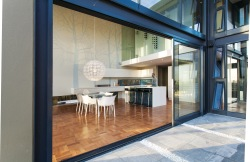
If you would like to upgrade the levels of security, insulation or aesthetics in your building or home, then aluminium is the right choice. 

Cobus Lourens from Swartland says today’s aluminium windows and doors have come a long way since the older styles of the 70s and 80s. He says new technology means that they are light but strong, durable, easy to maintain, and they offer a slim, streamlined aesthetic that makes them an ideal fit for contemporary designs. 

Cobus shares the advantages of choosing aluminium windows and doors. 

1. Slim frames and maximum glass 

Due to the strength of aluminium, less material is required in the frame to hold the glass. As a result, narrower frame profiles are possible for designs that have sleeker, slimmer lines for a more streamlined overall aesthetic. 

Its strength also allows for the creation of much bigger windows and doors, which maximises the glass area to open up the best possible outdoor view, blurring the lines between indoor and outdoor spaces. 

The aluminium's strength also allows for the creation of much bigger windows and doors, which maximises the glass area to open up the best possible outdoor view, blurring the lines between indoor and outdoor spaces.

Such sleek designs offer an understated frame to the outdoor view beyond, ensuring that the vistas take the leading role. Homeowners can get windows and doors that comprise top-hung, horizontal sliding and side hung windows, sliding and fold-a-side doors, and a range of complementary side lights for optimum design versatility. 

2. Robust, durable and easy to maintain 

Aluminium is well known for its robust properties, especially when exposed to the elements. It is unaffected by UV rays, it will not rot, rust or bend. 

What’s more is that it is virtually maintenance free, only requiring regular cleaning to keep it looking as good as new. 

Aluminium is a material especially suited for the South African climate as it handles damp, rain and harsh sunlight exceptionally well. It won’t warp, crack, discolour, rot or rust. Aluminium is also fireproof, offering added safety. 

3. Long-lasting colour and a high-end finish 

Any high-end range of aluminium windows and doors should have a sleek powder coat finish, which means that they never need to be painted as the finish offers excellent longevity. 

Because aluminium is light, malleable and easy to work with, it offers high levels of wind, water and air-tightness for optimum in-house energy efficiency.
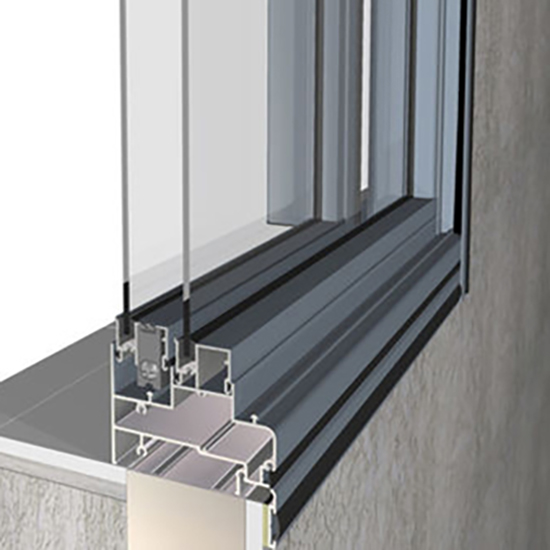
Another thing to think about is that some aluminium windows and doors have an anodised coating, which is a process that is harmful to the environment. Powder coating is a far better finish in terms of eco-ratings. 

4. Energy efficiency 

Because aluminium is light, malleable and easy to work with, its doors and windows can offer high levels of wind, water and air-tightness for optimum in-house energy efficiency, resulting in warmer, less draughty homes and lower energy bills. 

Aluminium is also recyclable, which significantly reduces the overall carbon footprint of any aluminium windows and doors. In fact, recycling aluminium requires only 5% of the initial energy consumed to create it. 

And lastly, Cobus says aluminium windows and doors offer supreme durability and longevity, which further reduce their already low carbon footprint.


Building or renovating your dream home is a wonderful project to engage in, and to see your dreams come to life, step by step. Yet it can also be quite a daunting experience, with all the options and decisions you are faced with!

Among all the other considerations, is the question of your windows and doors – an integral part of your home that is responsible for so much of the flow, functionality and aesthetics. It’s important to make the right decisions with regards to your fenestration, after all, you will be living with them for years to come – possibly even a lifetime!

To help you with your planning, we’ve created this short guide to choosing your windows and doors. This will help you approach the process with more clarity and confidence.

What styles of windows to choose? What about the sizes and configurations? How bright do you want your house to be? Should you replace a window with a door? What specialised glass can you choose, and why? Or should you opt for double glazing? What about installation? These are some of the considerations we will guide you through here.

The look and feel

First you should take some time to decide on the look and feel of your home. If you’re working with an architect, no doubt they will lead your hand through this process. If you’re undertaking renovations or prefer to get more involved, we walk you through the factors to consider…


Are you looking to create a bright and airy space? Are you going for an ultra modern look? Is rustic and cottage more your style? Or are you aiming to create an upmarket classic, with stately features? The style you choose will determine many of the characteristics of your windows and doors.

Your windows and doors are essentially what give your home it’s natural flow and plays a pivotal role in adding brightness to your space.

So for example you might want to go for large windows to take advantage of the surrounding views. You might opt for cottage pane style windows and doors. Or you may decide on huge sliding doors or stacking doors to open up your living room onto the garden. Choosing the most appropriate glass fixtures will go a long way towards creating the space you want.

There are many aspects of choosing the right windows and doors. First let’s take a look at the different types of windows and doors.

Types of windows

When you know about the different types of windows and doors available, you can be more creative with your space, and more confident in choosing what is best. So let’s take a closer look at the different types:

Casement windows have ’sashes’ that swing out from the window’s outer frame, allowing them to open very widely and thus making them perfect for ventilation. They can be top-hung or side-hung, and their units usually come as a combination of fixed panes as well as opening sashes. Top-hung casement windows are a good solution for the weather-facing side of any building, as you can have them open without admitting any rain or severe winds.

Sliding windows, a classic choice. They have an unobtrusive design, perfect for settings where space does not allow for sashes to project outwards. Or you may just enjoy the sleek design and practicality. Sliding windows come in 2, 3 or 4 panes, depending on the width of the window. They are designed to fit seamlessly next to other fixtures such as fixed-pane windows, sliding doors or folding doors.

Stacking windows, also called concertina windows or sliding-folding windows, open and fold back, essentially opening up the entire window space. These can be perfect for a serving hatch, for rooms where you need maximum ventilation, or if you want to create a more open feel towards your garden or pool area. These windows are available between 3 panels and 10 panels, depending on the total width.


Types of Doors

Next let’s take a look at the different types of doors available to you.


Sliding doors, are always popular for their elegance and practicality. You can consider aluminium sliding doors for rooms where you want to maximise the view and invite more light into your space. They are available in 2, 3,4 and 6 panels, depending on the width.


Hinged/French doors: Hinged doors are one of the more standard designs. They are manufactured either as a single door, or as a double door, commonly referred to as a French door. A single hinged door, can also be made as a stable door and is ideal for a kitchen entrance, while a French door is perfect for main entrances. The panels of these doors can be fitted with aluminium panelling or glass according to your requirements.


Sliding-folding doors, also called stacking doors, fold out and stack neatly to open up the entire width of the opening, which can be up to 9 metres wide! They are ideal if you want to open your lounge onto your garden or patio, or open up your bedrooms onto an upper balcony. They can even be used as interior dividers between rooms to complement an open plan scheme. Depending on the entire width of the opening, we will manufacture them from a 3 panel door right up to a 10 panel door.

Fixed-pane Windows

For areas of your home where you would simply like to let more light in or open up to the views outside, fixed-pane windows are an excellent choice. These are perfect for staircase landings, view windows, or feature windows. They have no opening sashes, and are custom made according to your specific dimensions. Fixed panes can span huge proportions, replacing entire walls or enclosing a double-volume feature of your house.


Sidelights and top-lights

Top-lights refer to the glass inserts above a window or door. Sidelights refer to the glass sections installed directly next to your door, either on one side or both. These fixtures are designed to compliment your windows and doors seamlessly. They are ideal for adding extra glass and therefore light to your home end effectively creating a glass feature instead of installing a single window or door.

Top lights and side lights can incorporate sections that are fixed panes of glass and others that are opening windows – usually in the form of top hung or side hung casement windows.

Styles and Profiles

Windows are windows, right? Well, not quite! Most homeowners are not aware that there is also a range of different “systems” or “profiles” when it comes to windows and doors.

If you have no particular preference or unique requirements, we will supply the most standard varieties. However, should you be looking for something more specific, or perhaps need to follow your body corporate specifications, this information will prove helpful.

Casement windows, for example, are available in the 30.5, the 34, 36 & 38mm profiles. The slimmer frames are more standard, feature more glass and less frame, and are synonymous with a modern sleek design. Whereas the bulkier frames (36 & 38) offer a more solid, stately and classic look. These are also more robust and are used in the manufacture of larger fixtures.

Similarly with sliding windows, there is more than one style or option to choose from. Two of our more popular ranges are the Knysna and Grecian systems. As an example, where the the Grecian system is more standard, the Knysna system allows for an additional glazing adapter to accommodates double glazing.

When it comes to sliding doors, you also have a choice. Our range includes popular styles such as the Slenderline, Villa & Palace doors. It is also possible to have your sliding doors and sliding windows manufactured from the same profile system, for a uniform aesthetic to your entire property. This is available as part of our Knysna range.

Your decision here will be guided by aesthetics, by your budget, as well as the product specifications, so keep this in mind when ordering your fixtures.

Colors and Finishes

Next, let’s talk about colours and finishes. Aluminium frames can be anodised or powder coated in a range of colours. When choosing windows and doors for you home, you would want to choose a colour that suits the aesthetics of your home.

We offer a range of finishes for your windows and doors. Our most popular finishes include the natural anodised (silver) finish as well as a range of standard powder coated colors such as: white, charcoal (grey) and bronze. Beyond this we offer a range of special powder coated colours like black and new silver. Keep in mind, however, that almost any custom colour is available if the size of the order warrants the customisation.

The natural anodized look is a good go-to option; it is cost-effective, and is a suitable complement to modern architecture. The white powder coated finish is very popular for modern, bright and open-planned layouts, whereas the charcoal grey is well suited to a more dignified and professional look. Again your decisions will be determined by your personal taste and budget.

Standard and Custom Sizes

At Pro Aluminium we manufacture your fixtures in both standard and custom sizes, depending on your buildings specifications! Standard sizes will cost you less, but certain designs may require custom manufactured sizes.

If your home design features unique fixtures like view windows, double volume windows, patio enclosures or doors with extended heights, speak to us for advice or a quote on custom sizes. However, if you require standard size window and doors, here is an idea of standard sizes below. (link to other pages with size specs)

Casement windows’ dimensions range between a single window of 600mm x 600mm up to a unit of 1800mm x 2400mm, incorporating top-hung or side-hung sashes.

Sliding windows are available in range of standard sizes, up to 3m in width, and up to 1.5m in height, but larger custom sizes are also possible.

Two-panel sliding doors range in sizes of up to 3m in width, whereas four-panel doors go up to 6m in width. (with 2.1m being the standard height, and 2.4m also easily available)

You’d be interested to know that when it comes to folding doors, we don’t have standard sizes, as we manufacture each door to spec. Where patio doors and french doors are restricted to smaller areas, folding doors open up extremely wide spaces, as much as 9 metres wide. These doors can be manufactured to a height of up to 2.7 metres.

Next, let’s take a look at an important factor when it comes to your windows and doors – glass.

Choosing the best Glass

You really can’t go wrong with aluminium windows and doors. Just take a look at the list of advantages here. Strong, sustainable and stylish – they will last you a lifetime. But did you know that the more ‘hardworking’ component of your windows and doors is the glass?

Glass technologies have advanced significantly over time, and architectural glass offers a range of different benefits from energy saving, to security, to sound reduction and more. By choosing the right glass for your home, you can take advantage of these benefits.

Ordinary glass can be responsible for up to 40% of the energy lost through your doors and windows. Our specialised energy saving glass offer an effective way to achieve better energy efficiency by reducing the cost of heating and cooling. Consider this if you want to lower your electricity bills while maintaining more comfortable temperatures indoors.

Safety and security glass is a specialised performance glass that reduces the risk of accidental injury or protects against deliberate attack such as manual, ballistic or blast. This glass can add that extra layer of defense to your home – it will slow down a burglar and is therefore crucial in thwarting an attempted break-in.

Acoustic, or sound reduction glass, incorporates specific sound inhibiting qualities, and serves to combat levels of unwanted noise both in homes and offices. This is an ideal type of glass to consider if your home is in a busy city or near a highway.

Glass can also be manufactured with various aesthetic properties to enhance architectural designs. If you are looking to add style and sophistication to your building, consider our range of tinted, reflective or coloured glass that can enhance and add a unique visual element to your home. (for more detailed info, read about our range of performance glass)

Double glazing..

Continuing with glass options, you also have the choice of double glazed windows and doors. Double glazing, comprises two pieces of glass fitted into an aluminium frame with a cavity that is filled with argon gas. The encapsulated space in-between reduces the transfer of sound, and thus makes a building quieter.
Double glazing is also used for its ability to reduce noise transmission. So it is especially useful if your home is on a busy street or near a playground for instance. Bare in mind that there is a higher cost factor to double glazing. Yet with the benefit it offers, you would do well to consider double glazing for your windows and doors.double glazed window, double glazing, glass

Expert manufacture. Professional installations.

Finally, once you made the key design decisions, you want to make sure that your aluminium windows and doors are professionally manufactured and installed. So it is important to work with a reputable company with all the necessary industry experience and accreditations.

At Pro Aluminium and Glass, we have been in the business for over 30 years and have performed countless successful installations for home owners just like you. (take a look at some of our customer comments here)

We offer a complete service for our clients, from early consultation to the manufacture and installation of quality aluminium and glass fixtures. And we guarantee a professional service, from start to finish, to leave your home with a comfortable interior, a stunning exterior, and to leave you satisfied with a job well done!

Introduction

  Introduction Aluminium fabricated items like doors, windows, staircase hand rails and supports, railings for verandas, corridors etc. have...